
What's included
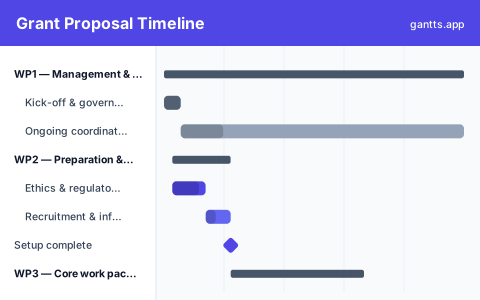
Most funders want to see that the work is decomposed, sequenced and staffed. The template uses the work-package structure common to NIH, NSF and Horizon Europe applications:
- WP1, Management & coordination, Kick-off, governance, reporting periods and the administrative spine that runs the whole award.
- WP2, Preparation & setup, Ethics and regulatory approvals, recruitment, protocol finalization and infrastructure set-up.
- WP3, Core work package, The primary research or delivery activity, split into the objectives named in your proposal. Milestone: interim results.
- WP4, Analysis & validation, Data analysis, validation, and any secondary studies or replication.
- WP5, Dissemination & impact, Publications, conference outputs, stakeholder engagement and knowledge transfer.
- Reporting, Interim and final reports aligned to the funder's reporting periods. Milestone: final report.
Who uses this template
Principal investigators, postdocs, and research administrators use this to produce the timeline figure that funders expect. Structured around work packages, deliverables, and milestones, it maps cleanly to NIH, NSF, and Horizon Europe application formats, helping applicants show reviewers a credible, well-paced plan for the funded period.
How to customize it
- Rename the work packages to match your proposal exactly, reviewers cross-reference them against the narrative.
- Set the award length; the template runs 36 months, a common project period.
- Align reporting milestones to your funder's periods (annual for many NIH awards, per reporting period for Horizon Europe).
- Add a deliverable row per named deliverable if your funder requires a deliverables table.
- Show dependencies between work packages so the sequencing logic is explicit.
Scheduling tips
- Keep it to one page. A work plan figure that needs zooming will not be read; month-level resolution is enough.
- Put ethics approval before recruitment. Reviewers notice when data collection starts before approval on the chart.
- Show overlap honestly. Work packages that run in parallel should look parallel, sequential bars imply a longer project than you are funded for.
- Mark deliverables as milestones. Funders track deliverable dates, so give them zero-duration markers rather than burying them in task names.
- Export as PDF for the application. Vector output stays sharp when the reviewer prints it.
Related templates
- PhD Research Gantt Chart Template
- Dissertation Gantt Chart Template
- Gantt Chart Template for Research & Thesis
- Browse all Gantt chart templates
Frequently asked questions
How do I make a Gantt chart for a grant proposal?
Structure it as work packages with deliverables and milestones, keep it at month resolution so it fits on one page, and align the phases to the budget period. This template gives you that structure pre-filled.
What should a grant timeline figure include?
Work packages matching your narrative, key deliverables and milestones, reporting periods, and visible dependencies between packages. Avoid task-level detail, reviewers want the shape, not the work breakdown.
Does this fit NIH, NSF or Horizon Europe formats?
The work-package structure is common to all three. Rename the packages to your proposal and align the reporting milestones to your funder's periods.