
What's included
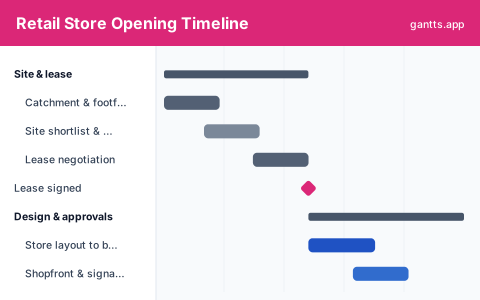
A store opening is a construction project, a hiring project and a buying cycle happening at once, all pointing at a date the landlord already advertised. The template runs them as parallel tracks:
- Site & lease, Catchment and footfall analysis, site shortlist, sales forecast, lease negotiation and landlord fit-out conditions. Milestone: lease signed.
- Design & approvals, Store layout to the brand standard, shopfront and signage design, landlord and centre-management approval, and building permits.
- Fit-out, Handover from landlord, shopfitting, flooring and lighting, fixtures and shelving, shopfront and signage install, then snagging.
- Licensing, systems & loss prevention, Trading licence, fire and accessibility inspections, POS and payment terminals, network, CCTV and security tagging. Milestone: cleared to trade.
- Inventory & merchandising, Opening order placed against supplier lead times, delivery and back-of-house set-up, planogram build and the visual merchandising install.
- Hiring, training & launch, Store manager first, then the floor team, product and POS training, the soft launch trading days and the grand opening. Milestone: grand opening.
Who uses this template
Store owners, franchise operators, and retail rollout managers reach for this when opening a new location. It ties together the lease, fit-out, trading licences, POS setup, merchandising, and staff hiring, so the soft launch and grand opening land on schedule and nothing critical, like your card terminals, arrives after the doors open.
How to customize it
- Anchor to the landlord's handover date, that is when your fit-out clock and often your rent both start.
- Add a row per fixture package if you are shipping shopfit from a central supplier rather than building on site.
- Extend the licensing phase if you sell anything regulated, alcohol, pharmacy, tobacco or firearms all carry their own timelines.
- Split merchandising into planogram build and floor install; they are different work done by different people.
- Keep the soft launch as real trading days with real customers, not a staff walkthrough.
Scheduling tips
- Read the landlord's fit-out conditions before you design. Centre management approvals, permitted working hours and delivery access rules will reshape the schedule, and finding out during install costs weeks.
- Order the shopfront and signage early. Custom signage has a long lead time and is usually the last thing installed, which puts it directly on the critical path to opening.
- Hire the store manager well ahead of the team. They own recruitment, training and the opening order sign-off, so the hire is a dependency rather than a headcount line.
- Test POS with real transactions. Payment terminals, pricing files and stock records need a live trading day to prove, which is what the soft launch is for.
- Protect the merchandising window. Visual install is the last thing squeezed and the first thing customers see; compressing it below a few days shows on the floor.
Related templates
- Restaurant Opening Timeline Template
- Trade Show Planning Timeline Template
- Recruitment and Hiring Plan Template
- Browse all Gantt chart templates
Frequently asked questions
How long does it take to open a retail store?
Commonly 4-9 months from site selection to opening for a mall or high-street unit, with lease negotiation and fit-out taking the biggest share. The template uses a roughly seven-month schedule you can compress or extend.
What usually delays a store opening?
Landlord and centre-management approvals, permits, and late signage. All three are third-party durations, which is why the template runs approvals and licensing as their own tracks rather than inside fit-out.
When should the opening inventory be ordered?
Early enough that the delivery lands before merchandising starts, working back from your suppliers' quoted lead times. The template links the merchandising install to the delivery so the dependency stays visible.
Can I use this for a pop-up or concession?
Yes. Drop the permit and shopfront rows for a concession inside a host store, and compress the fit-out phase, the licensing, systems, inventory and hiring tracks stay the same.