
What's included
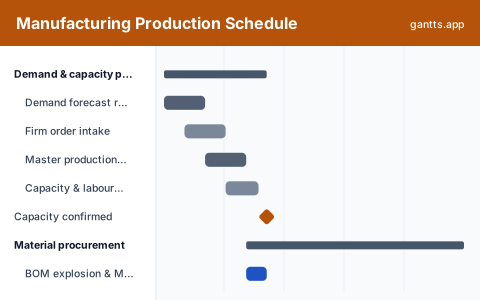
A production schedule is two schedules that have to meet: material arriving and capacity being available. The template runs both as separate tracks so the collision is visible before it happens on the shop floor:
- Demand & capacity planning, Forecast review, firm order intake, the master production schedule and a rough-cut capacity and labour check. Milestone: capacity confirmed.
- Material procurement, BOM explosion and MRP run, purchase orders, long-lead and standard deliveries, goods receipt and incoming inspection, and staging at the line. Milestone: materials available.
- Line scheduling & setup, Detailed sequencing, the changeover plan, tooling and fixture preparation, the changeover itself and first article inspection. Milestone: first article approved.
- Production runs, The runs themselves with changeovers between products scheduled as real tasks rather than assumed away.
- Quality control, In-process inspection and SPC, nonconformance hold and disposition, final inspection and test, and batch release documentation. Milestone: batch released.
- Packing & dispatch, Packing and labelling, palletizing and load planning, carrier booking and shipping documents. Milestone: order shipped.
Who uses this template
Production planners, plant managers, and supply chain teams use this to schedule a factory's output. It links the demand plan and material lead times to line scheduling, changeovers, production runs, quality holds, and dispatch, helping planners smooth throughput and see how a late material or a long changeover ripples into ship dates.
How to customize it
- Enter your real supplier lead times per component; the longest one, not the line schedule, usually sets the earliest possible start.
- Add a row per work centre or line if you are scheduling more than one, so contention is visible.
- Set changeover durations from actual measured times, and keep them separate from the runs on either side.
- Insert a quality hold bar wherever a batch waits for disposition, that wait is real inventory sitting still.
- Add safety stock or buffer bars ahead of runs that feed a firm customer commitment.
- Mark materials available, first article approved, batch released and order shipped as milestones.
Scheduling tips
- Schedule backwards from the ship date. Customer commitment is the fixed point; everything upstream should be derived from it rather than pushed forward from today.
- Do not schedule a run before incoming inspection clears. Material on site is not material available, and starting on unverified stock is how a whole batch ends up on hold.
- Sequence to minimize changeovers, then check the dates. The most efficient sequence and the sequence that meets due dates are rarely the same; the chart is where you see the trade.
- Give first article inspection its own bar. It is a gate, and a run that started before approval is a run you may have to scrap.
- Leave float before dispatch. Carrier bookings and load slots are external, and a batch released the morning of collection has no room for a rework loop.
- Baseline at the frozen schedule. Once the schedule is frozen for the period, track variance rather than quietly rewriting it.
Related templates
- Apparel Production Calendar Template
- New Product Development Plan Template
- Warehouse Setup Project Plan Template
- Browse all Gantt chart templates
Frequently asked questions
What should a production schedule include?
Demand and capacity planning, material procurement with real lead times, line scheduling and changeovers, the production runs, quality control and holds, and packing and dispatch. All six are pre-loaded here as separate phases.
How do I show changeovers on a Gantt chart?
As their own short bars between runs, with each run depending on the changeover before it. Hiding changeover inside a run bar overstates your available capacity, which is the most common error in a production schedule.
Does this work for process manufacturing?
It works best for discrete manufacturing, batches, units and changeovers. For continuous or process operations, keep the procurement and dispatch phases and replace the run rows with campaign bars.
How is this different from the apparel production calendar?
The apparel calendar is season-shaped, with sampling and fabric bookings against a retail drop date. This one is a general discrete manufacturing schedule built around lead times, changeovers and dispatch.