
What's included
A mine is a sequence of studies before it is a construction site. The template follows the stage-gate progression the industry actually uses:
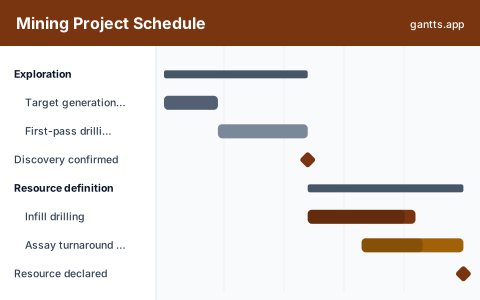
- Exploration, Target generation, geophysics, geochemical sampling and first-pass drilling. Milestone: discovery confirmed.
- Resource definition, Infill drilling, assay turnaround, geological modelling and a compliant resource statement. Milestone: resource declared.
- Studies & feasibility, Scoping study, pre-feasibility and the bankable feasibility study that supports a funding decision. Milestone: investment decision.
- Permitting & approvals, Environmental and social impact assessment, mining licence, water and tailings approvals, community agreements.
- Development & construction, Site access, power and water, plant construction, pre-strip or shaft sinking, and mobile fleet delivery.
- Ramp-up & operations, Commissioning, first production, ramp to nameplate capacity, plus the closure and rehabilitation plan. Milestone: commercial production.
Who uses this template
Mine planners, project engineers, and mining executives use this to take a deposit from exploration toward production. It sequences resource drilling, feasibility gates, permitting, development, and production ramp-up, giving the technical team and investors a stage-gated view of the long timelines and approvals that shape a mining project.
How to customize it
- Adjust the exploration and drilling phases to your deposit type, open pit and underground diverge sharply at development.
- Swap pre-strip for shaft sinking or decline development if the mine is underground.
- Extend permitting where community consultation or indigenous agreements are required.
- Add a tailings storage facility track; it frequently has its own permitting and construction path.
- Keep closure planning visible from the start, most jurisdictions require it before approval, not at the end.
Scheduling tips
- Treat each study as a gate. Scoping, pre-feasibility and feasibility are decision points, not just deliverables, link downstream work to their approval.
- Plan drilling around seasons. Access roads, ground conditions and wet seasons constrain rig availability far more than crew size does.
- Order long-lead plant early. Mills, crushers and transformers have lead times that can exceed the construction window itself.
- Ramp-up is not instant. Reaching nameplate capacity commonly takes six to eighteen months; showing it as a step change misleads everyone reading the chart.
- Track permits individually. A single outstanding water or tailings approval can hold the whole project regardless of construction progress.
Related templates
- Refinery Turnaround Schedule Template
- Free Construction Gantt Chart Template
- Project Management Gantt Chart Template
- Browse all Gantt chart templates
Frequently asked questions
How long does it take to develop a mine?
From discovery to commercial production is commonly 7-15 years. Exploration and studies dominate; construction itself is often only 2-3 years. The template compresses that lifecycle onto one chart.
What are the stage gates in a mining project?
Typically discovery, resource declaration, scoping study, pre-feasibility, bankable feasibility and the investment decision, each a gate that funds the next phase. All appear as milestones in the template.
Does this work for open pit and underground?
Both. The exploration, study and permitting phases are shared; swap the pre-strip rows for shaft sinking or decline development if your mine is underground.