
What's included
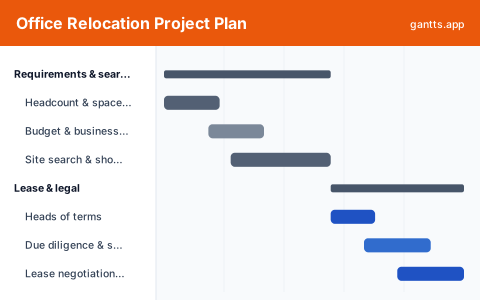
A relocation is two projects running at once: building the new space and exiting the old one. The template runs both, because dilapidations are where relocation budgets quietly break:
- Requirements & search, Headcount forecast, space and ways-of-working requirements, budget, site search and shortlisting.
- Lease & legal, Heads of terms, due diligence, lease negotiation and signature, plus notice served on the existing lease. Milestone: lease signed.
- Design & fit-out, Test fits, detailed design, landlord approvals, permits, construction, furniture install and snagging.
- IT & connectivity, Circuit orders, comms room build, cabling, AV and meeting rooms, and network cutover planning, the workstream with the longest external lead time.
- Move planning & communications, Move vendor selection, staff communications, floor plans and seat allocation, crate distribution and the move-day runbook.
- Move & decommission, The move weekend, first-day floor support, old-site clearance and dilapidations settlement. Milestone: old site handed back.
Who uses this template
Facilities managers, office managers, and workplace or IT leads use this when a company moves premises. It covers requirements gathering, site search, lease signing, design and fit-out, IT cutover, the move weekend, and decommissioning of the old space, so business-as-usual keeps running while everything physically shifts.
How to customize it
- Anchor the plan to your existing lease expiry, that date is fixed and everything else negotiates around it.
- Add a break-clause or notice-period milestone; missing it is the most expensive mistake available on this project.
- Extend the IT phase to your provider's actual quoted lead time rather than a nominal one.
- Split the move weekend into departments or floors if you are moving more than a hundred people.
- Keep dilapidations as visible tasks, settling the old lease is a real workstream with a real cost, not an afterthought.
Scheduling tips
- Run the exit in parallel from day one. Dilapidations surveys and negotiations take months and are far cheaper handled early than under time pressure.
- Communicate seat allocation before the move, not during. The single biggest source of first-day chaos is people not knowing where they sit.
- Test the network before move weekend. The new space should be proven with real users on a pilot day rather than on Monday morning.
- Book the lift and loading dock early. In multi-tenant buildings these are shared resources with their own booking calendars.
- Plan a floor-walking support day. First-day issues are small and numerous; having IT and facilities visible on the floor resolves them in minutes.
Related templates
- Project Management Gantt Chart Template
- Free Home Renovation Gantt Chart Template
- Free Employee Onboarding Gantt Chart Template
- Browse all Gantt chart templates
Frequently asked questions
How long does an office relocation take?
Typically 6-12 months from requirements to move-in for a mid-sized office, driven mainly by site search, lease negotiation and fit-out. The template uses a nine-month schedule you can adjust.
What is usually the longest lead time in an office move?
Telecoms and internet circuit provisioning at the new site, which frequently exceeds the fit-out duration. That is why IT and connectivity is a separate phase here rather than a line inside fit-out.
Does the template cover exiting the old office?
Yes. Notice, dilapidations and clearance run as tasks in parallel with the new-site work, because the exit is where relocation budgets most often overrun.